


“This article has been republished on financial insight with permission of the author”

October 16 marked World Food Day, commemorating the founding of the United Nations Food and Agriculture Organization in 1945. Across the world, this day offers an opportunity for countries to assess their food security conditions and efforts to boost agricultural production.
One of the measures that some often use to evaluate the food security condition of each country relative to the world is The Economist’s Global Food Security Index, which Corteva sponsors. This latest Index ranks South Africa at 59 out of 113 countries, an improvement from the 70th position in 2021. This places South Africa as the most food secure in the African continent, followed by Tunisia at 62nd.
This improvement is commendable. When looking at the Index scoring’s technical position, it becomes clear why South Africa’s food security ranking has improved. South Africa’s scoring came in at 61,4, up from 57,8 in 2021.
This shows that South Africa’s progress in the Global Food Security Index is not merely because other countries have regressed, particularly since the start of the Russia-Ukraine war, which increased global food prices but that there has been an actual improvement in its own underlying conditions.
The Global Food Security Index comprises four subindices, namely; (1) food affordability, (2) food availability, (3) food quality and safety, and (4) sustainability and adaption. The affordability and availability subindices carry a combined weighting of two-thirds of the total index.
The affordability subindex includes the change in average food costs, agricultural trade, food safety net programs, and funding for food safety net programs. Meanwhile, the availability subindex includes the sufficiency of supply, agricultural infrastructure, and political and social barriers to food.

In 2022, South Africa experienced a mild deterioration in the food affordability subindex of 7 points. Meanwhile, the rest of the other subindices improved significantly. This decline in the affordability subindex is unsurprising as the country has witnessed a broad acceleration in consumer food price inflation since the start of the year.
South Africa’s consumer food price inflation averaged 8,0% y/y in the first eight months of 2022, from 6,5% over the same period in 2021. Still, what is worth emphasizing is that this challenge speaks to the rising cost of food in an environment of generally high unemployment.
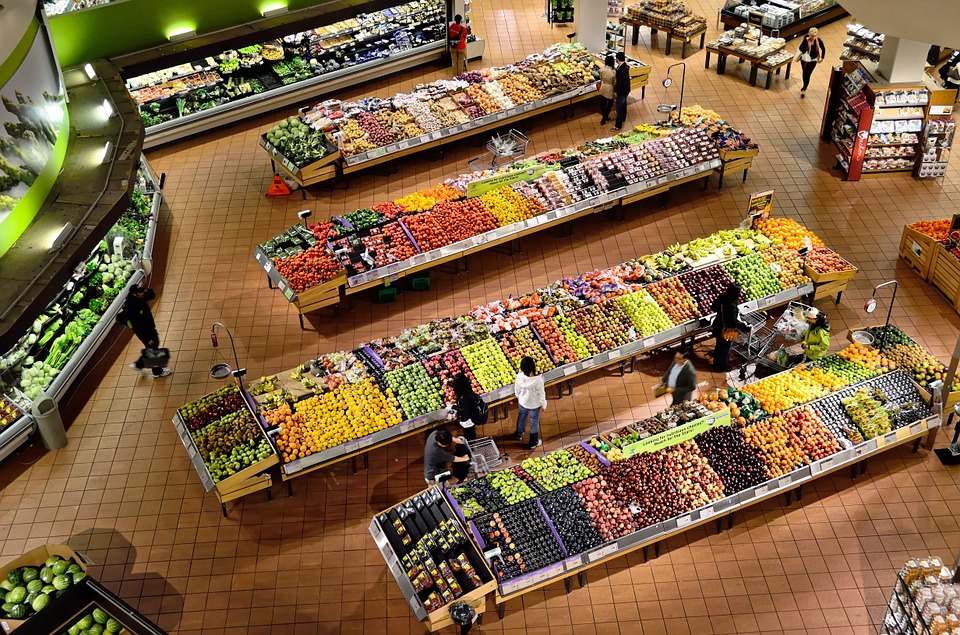
Notably, the rise in food prices is a global phenomenon and not unique to South Africa. The dryness in South America, which negatively affected the crops in the 2021/22 production season, combined with growing demand for oilseeds and grains in China, and higher shipping costs, and recently, the Russia-Ukraine war, are some of the factors that have underpinned global food price inflation surge. This, in turn, lifted prices in South Africa, despite the large domestic agricultural harvests in the past three seasons.
Nevertheless, global food prices have come off the levels we saw in the months immediately after Russia invaded Ukraine. For example, in September 2022, the FAO’s Global Food Price index was down by 1% from the previous month. This marked a sixth monthly decline and was underpinned by the deterioration in the prices of vegetable oils, sugar, meat, and dairy products.
This means that affordability for all countries has far improved from the third quarter of the year. Still, the current price levels are higher than in 2021. For example, the FAO’s Global Food Price Index is still 6% up from September 2021. Another key point to emphasize is that food prices were already elevated in 2021 due to disruptions in the supply chains, drought in South America, and increased demand for grains in China, amongst other factors.
A major issue to keep in mind when observing global agricultural indices, such as the Global Food Security Index, is that subjectivity can never be fully eliminated from the authors’ judgment.
Resource constraints can hinder objective data collection on the ground in each country, and they sometimes rely on blueprint models that might not be site specific. Sources of bias can stem from inconsistency in data quality, frequency, and reliability across all countries. The weightings and rankings are also tricky because they must be tailored to suit different socio-economic contexts.
Still, the key message is that South Africa is in a better place regarding food security and leading the continent. This does not mean there should be complacency. South Africa will need to continue improving food security through expansion in agricultural production and job creation in various sectors of the economy.
As we have previously stated, at a technical level, the ideas of expanding agriculture and agro-processing capacity to boost growth and job creation were well established as far back as in National Development Plan in 2012. They were again highlighted in the 2019 National Treasury paper and, most recently, in the 2022 Agriculture and Agro-processing Master Plan.
These include expanding agricultural activity in the former homelands and government land, enhancing government-commodity organizations’ partnerships in extension services, investment in the network industries (water, electricity, and road infrastructure), port infrastructure, and state laboratories.
Some interventions are more regulation-focused and therefore do not require significant capital spending by the government, although these still need institutional capacity building.
Such regulatory interventions include modernizing regulations such as the Fertilizers, Farm Feeds, Seeds and Remedies Act 36 of 1947, with which many role players in agriculture continue to express dissatisfaction. The Agricultural Product Standards Act’s enforcement to ensure that the Department of Agriculture, Land Reform, and Rural Development leads the implementation and does not assign it to third parties is another critical intervention that could be explored.
Regarding regional focus, Limpopo, KwaZulu-Natal, and the Eastern Cape, the most food-insecure provinces, also have vast tracts of underutilized land. These provinces should be a priority in agricultural development plans. With a commercial focus where conditions permit, agriculture improvement would help job creation and household food security in South Africa.